Post-credit scenes: results for “tag: glacier”

Poster for The Tomorrow War (2021). Never been answered.

The world is stunned when a group of time travelers arrive from the year 2051 to deliver an urgent message: Thirty years in the future, mankind is losing a global war against a deadly alien species. The only hope for survival is for soldiers and civilians from the present to be transported to the future and join the fight. Among those recruited is high school teacher and family man Dan Forester. Determined to save the world for his young daughter, Dan teams up with a brilliant scientist and his estranged father in a desperate quest to rewrite the fate of the planet.

Movie poster for Iceman (1984), waiting for its first vote.

A team of Arctic researchers find a 40,000 year-old man frozen in ice and bring him back to life. Anthropologist Dr. Stanley Shephard wants to befriend the Iceman and learn about the man's past while Dr. Diane Brady and her surgical team want to discover the secret that will allow man to live in a frozen state.

Poster for Scott of the Antarctic (1948). Never been answered.

The true story of the British explorer Robert Falcon Scott and his ill-fated expedition to try to be the first man to discover the South Pole - only to find that the murderously cold weather and a rival team of Norwegian explorers conspire against him

Image for Planet of the Sharks (2016), a film with no post-credit data.

In the near future, glacial melting has covered 98% of earth's landmass. Sharks have flourished and now dominate the planet, operating as one massive school led by a mutated alpha shark.

Poster for Eisgrab - Das Haus am Gletscher (2026), blank on post-credit scenes.

A couple want to sell their house on a glacier. A potential buyer, who suffers a fainting spell during the viewing, is immediately accommodated in the guest room. She behaves strangely, sneaking into the couple's bed at night and seems to have a connection to the glacier area.

Poster for Alone on the Torre (2026), blank on post-credit scenes.

Elite alpinist Colin Haley lays everything on the line in a legendary winter solo push on Cerro Torre – one of Patagonia’s most iconic and unforgiving peaks

Poster for The Man with Nine Lives (1940). No votes yet on whether it has a post-credit scene.

Dr. Leon Kravaal develops a potential cure for cancer, which involves freezing the patient. But an experiment goes awry when authorities believe Kravaal has killed a patient. Kravaal freezes the officials, along with himself. Years later, they are discovered and revived in hopes that Kravaal can indeed complete his cure. But human greed and weakness compound to disrupt the project.

Poster for Blood Glacier (2013). Never been answered.

At a climate research station in the Alps, the scientists are stunned as the nearby melting glacier is leaking a red liquid. It quickly turns to be very special juice — with unexpected genetic effects on the local wildlife.

The Mole People (1956) poster. The count is still zero.

A party of archaeologists discovers the remnants of a five millennia-old mutant Sumerian civilization living beneath a glacier atop a mountain in Mesopatamia.

Chasing Ice (2012) poster. The count is still zero.

When National Geographic photographer James Balog asked, “How can one take a picture of climate change?” his attention was immediately drawn to ice. Soon he was asked to do a cover story on glaciers that became the most popular and well-read piece in the magazine during the last five years. But for Balog, that story marked the beginning of a much larger and longer-term project that would reach epic proportions.

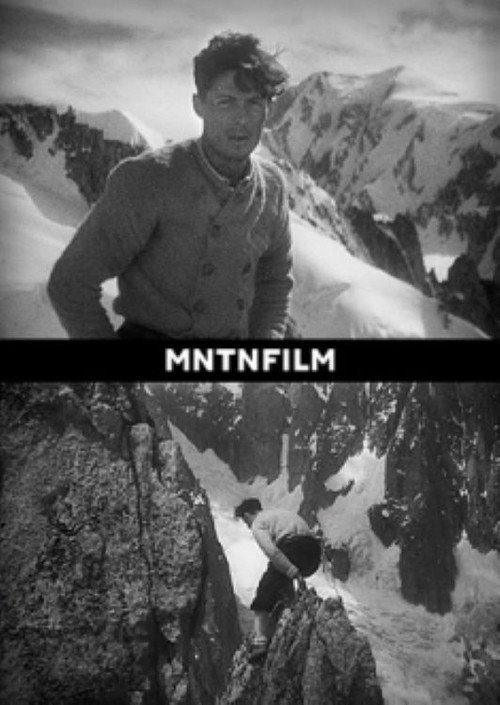
Three Lives and a Rope (1934). Nobody has said whether there is anything after the credits.

The idea is a simple one: three alpinists climb in the Mont Blanc Massif. This situation brings one face to face with the dangers of the mountain: avalanches, crevasses, fog, the climbing of the rocks, roping up, etc. All of this is magnified, transcended by a remarkable and strong use of the language of cinema. One of the first films about high mountains with Roger Frison-Roche and magnificent music by Maurice Jaubert

Qivitoq (1956) cover. Nothing recorded about its credits.

A young teacher, Eva Nygaard, arrives in Greenland from Denmark to surprise her fiancé, the Doctor Erik Halsøe, but is crushed to find he has not waited for her and he is about to be married to his assisting nurse. Eva travels to a small fishing village to await the next ship back to Denmark. There she enters into a tense and often confrontational relationship with Jens, a quiet moody Dane who manages a trading company outpost. Meanwhile, Jens is trying to persuade a Greenlander named Pavia to become a company fisherman, despite Pavia's fear of alienating his fellow villagers and upsetting the spirit, Qivitoq.

Film artwork for The Call Of The Peaks (1946), no verdict on the credits.

L'Appel Des Cimes, directed by Alain Pol, is a documentary commissioned by the CAF and the various French ministries on the practice of post-war mountaineering. In 1946, climbers trained at the Fontainebleau Climbing School. Guy Poulet and Jacques Poincenot try to climb the Aiguilles de Chamonix but fail during the climbing phase. After a night in a refuge with Denise Rouzeau and the guide Pierre Allain, the mountaineers make a new attempt. Successful demonstration for those who continued the approach walk then the passage of the seracs of the glacier. On the rock, the roped party crosses a chimney and a crack to reach the summit and abseil down. Led by high mountain scouts, Guy and Jacques rediscover the glaciers and needles of the Mont-Blanc massif during the next lesson.

Poster for Battle for the Mountain (1941), awaiting its first vote.

Sound and shortened version of 'Im Kampf mit dem Berge', Arnold Fanck's second major mountaineering film, from 1921. The film follows two mountain enthusiasts, battling through a glacier area in the Swiss mountains. The mountaineers are two very prominent skiers at the time, Hannes Schneider and Ilse Rohde, who climb the Lyskamm. Arnold Fanck's film production company (Berg und Sportfilm GmbH) was acquired in 1925 by the UFA, whose cultural department reedited the film into a short and sound version in 1940 with the music of Giuseppe Becce.

The Grépon Traverse (1923) poster image. Zero votes so far.

In 1923, André Sauvage produced his first film La Traversée du Grépon. Dedicated to mountaineering in the Mont Blanc massif, this documentary is a performance that earned him the recognition of his peers. André Sauvage and his companions decide to climb the Grépon, the best known of the Aiguilles de Chamonix, in the Mont Blanc Massif. Early in the morning, they cross the Mer de Glace, climb rocky peaks, abseil summits, cross crevasses, snowfields and long seracs. After sixteen hours of effort, the climbers return to the refuge. With his camera, Sauvage documents the difficult undertaking, also showing his strong passion for the mountains. "The deepest perception of mountains begins where intelligence ends." (A. Sauvage). Two long versions of the film have disappeared, one of 90 and the other of 51 minutes and only eight minutes are preserved.

Film artwork for Far North (2008), no verdict on the credits.

In the arctic, as Saiva is being born, a shaman declares that she is evil and will bring harm to all who become involved with her. Saiva is cast out of her tribe of herders and grows up to live a nomadic existence with Anja, a young woman she adopts as an infant. Then Loki, an injured and starving soldier, stumbles into their isolated lives. The women nurse him back to health, but treachery, violence and doom await them all.

Poster for Autour d'un film de montagne (1944), awaiting its first vote.

Making of the cinematographic shooting of "Premier de cordée" directed by Louis Daquin in the Mont-Blanc massif. In 1943. Alain Pol films the risky adventure of filming in the high mountains with a team of seventy people. The images of the making-of reveal the technical constraints encountered by the actors and technicians: falling rocks, crossing glaciers and long approach walks at altitude to the filming locations. Six actors and technicians will also be injured and the main role - that of Pierre - will be reassigned to André Le Gall following a bad fall by Roger Pigaut.

Julia Bradbury's Iceland Walk (2011) artwork. Still a mystery after the credits.

Julia Bradbury heads for Iceland to embark on the toughest walk of her life. Her challenge is to walk the 60 kilometres of Iceland's most famous hiking route, a trail that just happens to end at the unpronounceable volcano that brought air traffic across Europe to a standstill in 2010 . With the help of Icelandic mountain guide Hanna, Julia faces daunting mountain climbs, red hot lava fields, freezing river crossings, deadly clouds of sulphuric gas, swirling ash deserts and sinister Nordic ghost stories as she attempts to reach the huge volcanic crater at the centre of the Eyjafjallajökull glacier.

Privacy policy

When you vote, we save your Yes or No answer and when you voted.

We use a cookie and your internet address to recognize your vote on each movie. This prevents repeat votes. The cookie lasts for five years.

Your votes are kept as part of the movie totals.